DEN takes its name from the Japanese character 伝 (den): to hand something down. At DEN Culinary, omakase is an intimate expression of Japanese craftsmanship, guided by seasonality, precision and respect for every ingredient.
Japanese cooking sits at the centre. Western, Thai, Chinese and Peruvian technique sit around it, learned in the kitchens the two chefs trained in.
The chefs
Alex
Founder · Owner-Chef
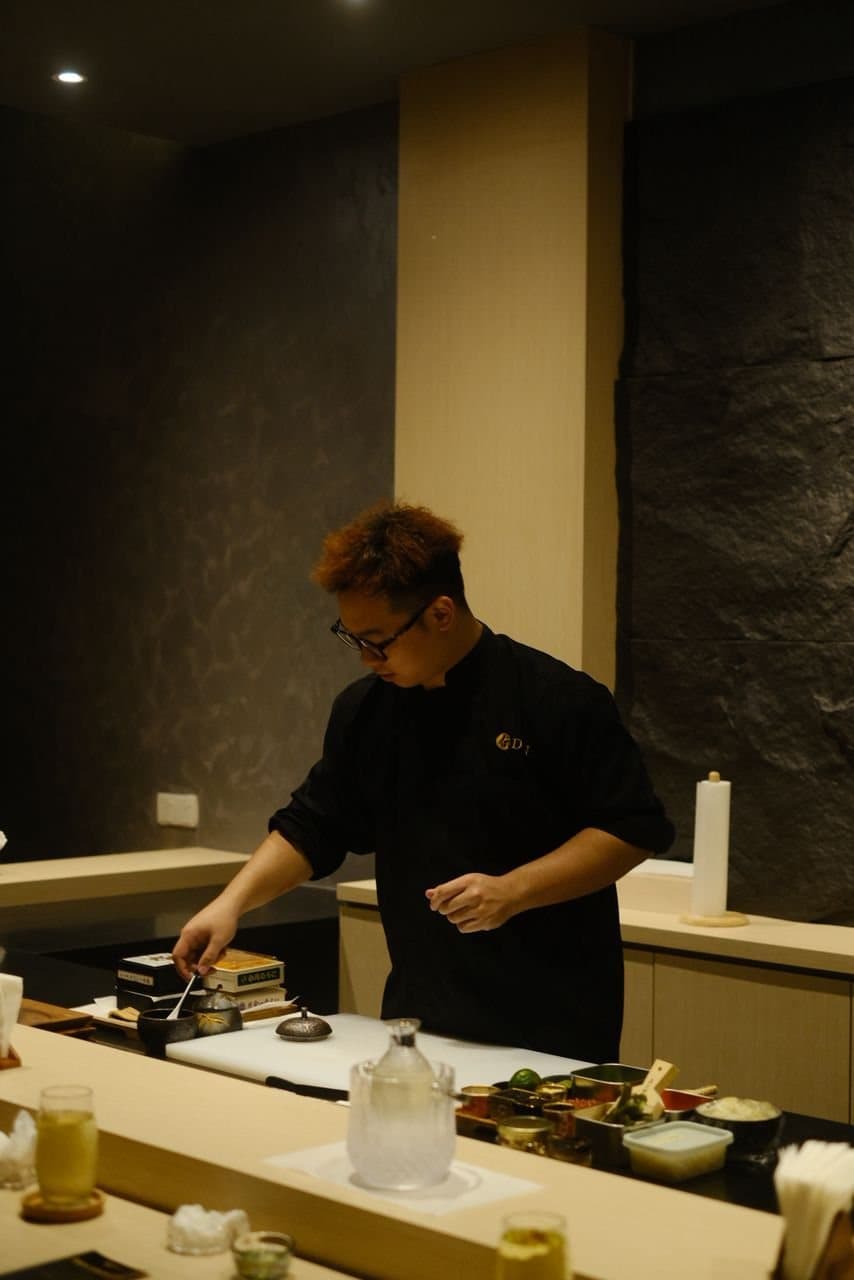
Alex is the founder of DEN Culinary and the itamae behind the counter. His cooking is shaped by Japanese food culture and the shokunin spirit — the craftsman’s way of working — formed over five years in Japan.
He trained at Tsuji Culinary Institute in Osaka, Japan’s leading culinary school, and the alma mater of more Michelin-starred chefs than any other in the country.
He cooked kaiseki at Kodaiji Jugyuan, the two-Michelin-starred house in the grounds of Kōdai-ji Temple in Kyoto, and Edomae sushi at the counter of Fufu Atami, the onsen hotel in Atami. He also worked the fish market, handling seafood at the source. His path later ran through Nobu.
He left Japan to cook in Malaysia as he had been taught: to hand on Japanese food culture, so that diners here can taste it as it is practised there — exacting, and treated with care. DEN Culinary is that kitchen: a hidden omakase in a converted factory in Kulai.
Desmond
Executive Head Chef
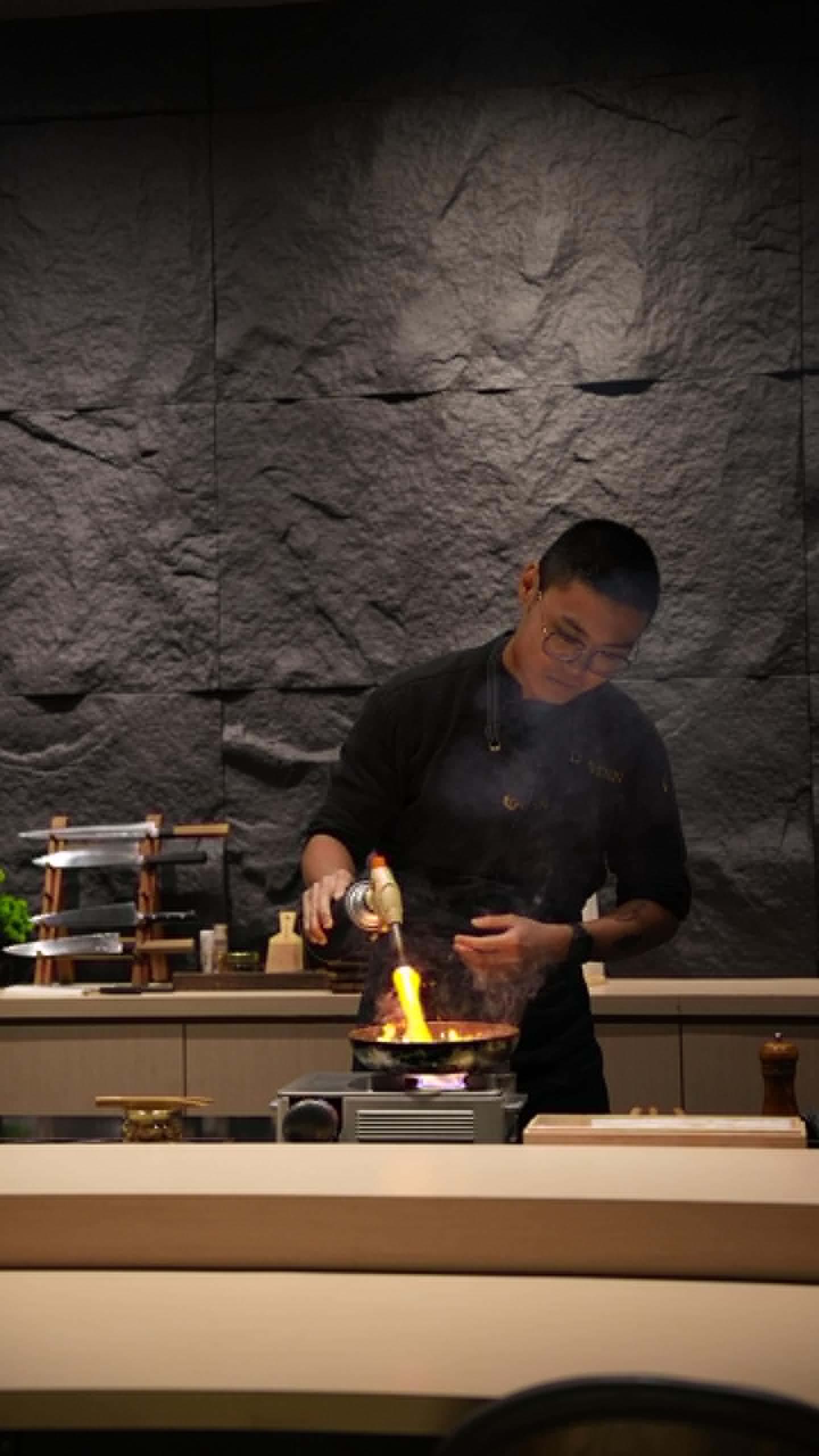
Working alongside Alex is Executive Head Chef Desmond, trained in French cuisine at Le Cordon Bleu.
From there he cooked at Nobu Singapore, where Japanese cuisine meets Peruvian technique, and worked the kitchen’s key stations: starters, mains, the charcoal grill, and the Josper.
At DEN, Japanese cooking stays at the centre. Western, Thai, Chinese and Peruvian technique sit around it — not fusion for its own sake, but two trained paths at the same counter.
Japanese cooking at the centre; Western, Thai, Chinese and Peruvian technique around it. Tradition first, then fusion — two trained paths at one counter.